
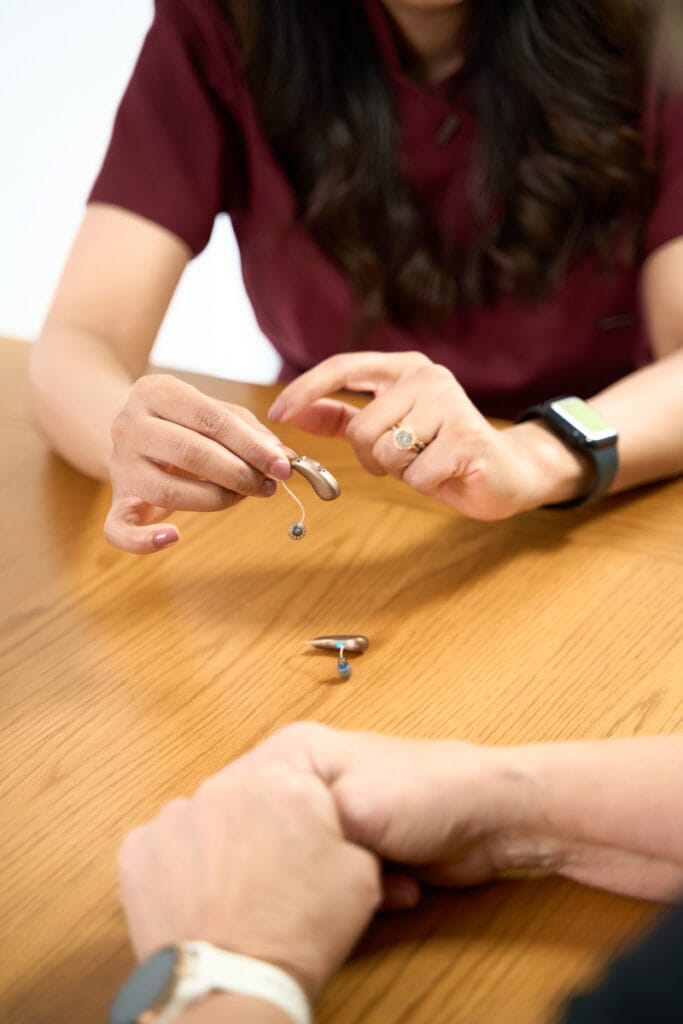
Home Hearing Aid Fittings in Leicestershire: What to Expect
Getting hearing aids fitted does not mean sitting in a waiting room or travelling across Leicestershire to a clinic. Home hearing aid fittings bring the entire process, from assessment through to fitting and follow-up, directly to your living room. If you are considering this route, here is exactly what to expect.
Why Choose a Home Fitting?
Many people find travelling to a clinic difficult, whether due to mobility issues, a busy schedule, or simply a preference for the comfort of home. A home fitting removes that barrier entirely. There is no travel, no waiting room, and no need to arrange transport.
There is also a genuine clinical advantage. Being fitted in your actual home means your hearing aids can be adjusted to the specific sounds of your environment, the hum of your fridge, the layout of your living room, the volume you typically use for the television. This tends to produce a more accurate and comfortable result than a generic clinic setting.
Home fittings also make it easy for a partner, family member, or carer to be present, ask questions, and get involved in decisions about your hearing care.
Before the Appointment
Preparing for a home visit is straightforward. Choose a quiet, well-lit room with a table and two chairs, your living room or kitchen is usually ideal. There is no need to tidy or rearrange anything specially.
It helps to think ahead of time about the specific situations where you struggle to hear. Restaurants, phone calls, family gatherings, or the television are common examples. Bringing these examples to the appointment helps your audiologist understand exactly what you need from your hearing aids.
What Happens During the Assessment
Your audiologist will arrive with a portable case containing the same professional equipment used in a clinic setting. The appointment usually starts with a conversation about your health, family history of hearing loss, and any specific concerns you have. This is all kept confidential.
Next comes a gentle examination of your ears to check for anything that might be affecting your hearing, such as a build-up of earwax. If wax is found, this can often be addressed on the same visit before the hearing test proceeds.
A full hearing test follows, which is straightforward and involves listening to a series of tones and sounds at different volumes and frequencies. Once your results are ready, your audiologist will explain what they mean in plain terms, without unnecessary jargon.
Choosing the Right Hearing Aids
Based on your hearing test results, your audiologist will talk through the hearing aid options that genuinely suit your degree of hearing loss, your lifestyle, and the technology and connectivity features that matter to you, such as Bluetooth streaming or rechargeable batteries.
If custom earmoulds are needed for your chosen device, impressions of your ears will be taken during this visit, and you will be contacted once they are ready.
The Fitting Itself
Once your hearing aids are ready, the fitting appointment involves programming the devices to match your specific hearing test results. This is where Real Ear Measurement matters. A small probe microphone is placed in your ear canal alongside the hearing aid to measure exactly how much sound is reaching your eardrum, allowing the device to be calibrated precisely to your prescription rather than relying on generic settings.
Your audiologist will also discuss the listening environments you use most often, so the devices are programmed to perform well specifically for your daily life, not just in an average or theoretical setting.
You will be shown how to insert and remove the devices, how to clean and maintain them, how to change or charge the batteries, and how to connect them to your phone or television if applicable.
What Happens After the Fitting
A follow-up appointment shortly after fitting is an important part of the process. This is where you can report back on how the sound quality feels, whether certain situations still feel difficult, and whether the devices are comfortable to wear throughout the day. Adjustments at this stage make a genuine difference to how well the hearing aids perform long term.
Most people benefit from a hearing test roughly every 18 months to keep track of any changes in hearing over time.
Frequently Asked Questions
Is a home fitting as good as a clinic fitting? Yes. The same professional equipment and clinical standards apply. Many audiologists consider home fittings to have an advantage, since the devices can be calibrated to your actual living environment rather than a simulated clinic setting.
How long does a home fitting appointment take? This varies depending on whether earwax needs addressing and how many questions you have, but most fitting appointments take around an hour.
Can a family member be present during the appointment? Yes. Having a partner, family member, or carer present is welcomed and can help with decision-making and understanding the results.
How often will I need follow-up appointments? A follow-up shortly after fitting is standard. Beyond that, most people benefit from a check-up roughly every 18 months, or sooner if anything changes with their hearing or their devices.
Book a Home Hearing Aid Fitting in Leicestershire
I offer home visit hearing assessments and hearing aid fittings across Loughborough, Mountsorrel, Sileby, Syston, Hinckley, Coalville, and the surrounding areas of Leicestershire.
I am a fully qualified audiologist accredited by the British Society of Hearing Aid Audiologists (BSHAA) and registered with the Health and Care Professions Council (HCPC). All fittings include Real Ear Measurements as standard.
Call 07502 353946 or click here to book an appointment.