
Hearing Tests for Over 60s: What You Need to Know
Hearing loss becomes increasingly common as we get older, but it is often so gradual that people do not notice it happening. A regular hearing test is one of the simplest things you can do to protect your hearing, your independence, and your long-term health. Here is what you need to know.
How Common Is Hearing Loss After 60?
Age-related hearing loss, known medically as presbycusis, is the most common cause of hearing loss in adults. A 2025 review of hearing loss among older adults found that prevalence roughly doubles with each passing decade, from around 27% of people aged 60 to 69, to 55% of people aged 70 to 79, with over 90% of people aged 85 and above experiencing some degree of hearing loss.
Presbycusis typically affects both ears equally, begins with higher-pitched sounds, and progresses slowly over years or decades. This gradual pattern is exactly why so many people do not realise their hearing has changed until family members point it out, or until they notice they are struggling to follow conversations in noisy places.
Why Hearing Tests Matter More as You Age
It protects your cognitive health
The 2024 update to the Lancet Commission report on dementia identified hearing loss as the single largest modifiable risk factor for dementia in midlife. The report concluded that the evidence for hearing aids reducing dementia risk has grown stronger, and that addressing hearing loss is likely to be a cost-effective way to support long-term cognitive health.
This does not mean hearing loss causes dementia directly. The relationship is complex, but untreated hearing loss is consistently linked to social withdrawal, isolation, and reduced cognitive stimulation, all of which are known risk factors for cognitive decline.
It catches treatable causes early
Not all hearing changes are age-related. Earwax buildup, ear infections, and other treatable conditions can all cause symptoms that feel identical to age-related hearing loss. A hearing test with a proper ear examination rules these out, and in many cases, the fix is far simpler than a hearing aid.
It supports mental health and independence
Struggling to follow conversations often leads people to withdraw from social situations rather than repeatedly ask others to repeat themselves. Over time, this can affect confidence, relationships, and overall quality of life. Addressing hearing loss early helps maintain the social connections that matter most.
What Are the Signs You Might Need a Hearing Test?
- Frequently asking people to repeat themselves
- Turning the television or radio up louder than others in the room prefer
- Struggling to follow conversations in restaurants or group settings
- Difficulty hearing on the phone
- Family members mentioning that you seem to be missing things
- A feeling that people are mumbling more than they used to
- Ringing, buzzing, or humming in the ears (tinnitus)
If any of these sound familiar, it is worth booking a hearing test, even if the changes feel minor.
What Happens During a Hearing Test?
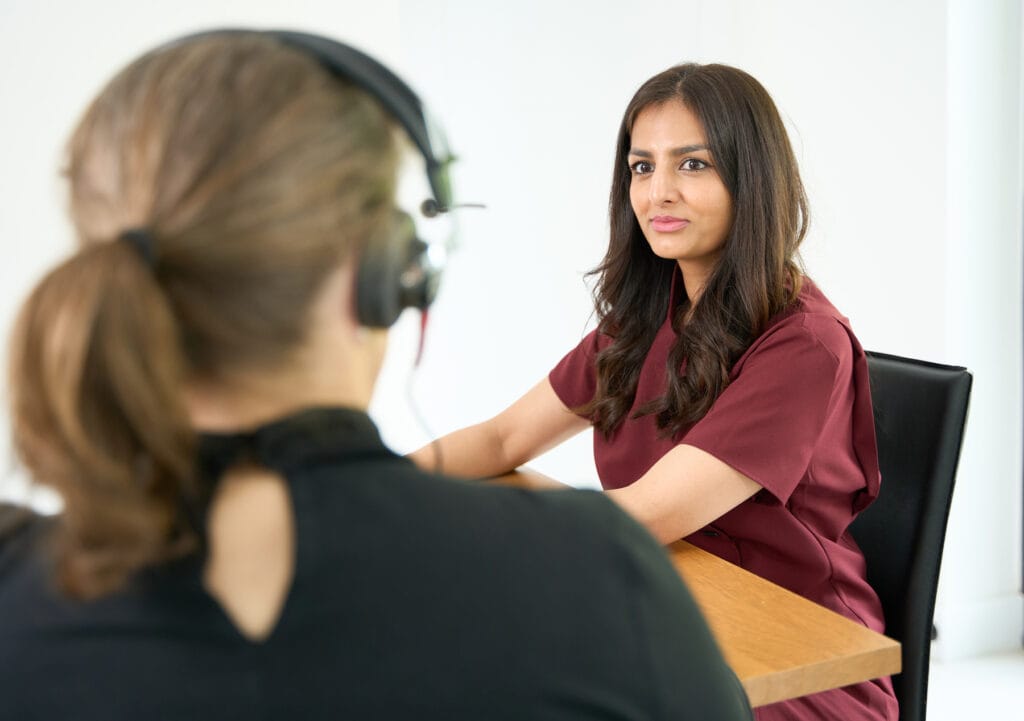
A hearing test typically begins with a discussion about your health history, any hearing concerns, and situations where you have been struggling. Your audiologist will then examine your ears to check for earwax or other visible issues before carrying out the test itself.
The test involves listening to a series of tones at different pitches and volumes through headphones, and often includes speech tests to assess how well you can follow conversation, particularly against background noise. The whole process is straightforward and not uncomfortable.
Once complete, your audiologist will explain your results clearly and talk through whether a hearing aid, further investigation, or simply a follow-up test in future would be the right next step.
How Often Should Over 60s Have a Hearing Test?
There is no single rule, but many audiologists recommend a baseline hearing test at 60, followed by a check-up roughly every one to two years, or sooner if you notice any changes. If you already wear hearing aids, a hearing test roughly every 18 months helps ensure your devices remain properly matched to your hearing, since hearing loss can continue to progress gradually over time.
What If the Test Shows Hearing Loss?
A diagnosis of hearing loss is common and very manageable. NICE guidelines recommend that people with aidable hearing loss in both ears should be fitted with two hearing aids rather than one, since this provides better speech clarity, particularly in noisy environments. Follow-up appointments in the weeks after fitting help fine-tune the devices to your specific hearing and lifestyle.
Modern hearing aids are considerably more advanced, and more discreet, than devices from even a decade ago. Recent UK survey data shows the vast majority of hearing aid users are satisfied with their devices and report a genuine improvement in their quality of life as a result.
Frequently Asked Questions
Is a hearing test painful or uncomfortable? No. A hearing test involves listening to sounds through headphones and is not uncomfortable in any way.
Can hearing loss be reversed? Age-related hearing loss cannot usually be reversed, but its impact on daily life can be significantly reduced with properly fitted hearing aids. Some causes of hearing loss, such as earwax buildup, can be resolved entirely.
Does hearing loss really affect dementia risk? The 2024 Lancet Commission report identified hearing loss as the largest modifiable risk factor for dementia in midlife, and found growing evidence that treating hearing loss helps reduce that risk. It is one of several important factors in long-term cognitive health.
I only struggle in noisy places. Do I still need a test? Yes. Difficulty following speech in background noise is one of the earliest and most common signs of age-related hearing loss, even when hearing in quiet settings still feels normal.
Book a Hearing Test in Leicestershire
I offer home visit hearing assessments across Loughborough, Mountsorrel, Sileby, Syston, Hinckley, Coalville, and the surrounding areas of Leicestershire.
I am a fully qualified audiologist accredited by the British Society of Hearing Aid Audiologists (BSHAA) and registered with the Health and Care Professions Council (HCPC). All fittings include Real Ear Measurements as standard.
Call 07502 353946 or click here to book an appointment.